

Plain English Glossary: AI Terms for the Rest of Us
The Basics Term What it actually means Parameter A dial the model tuned while learning. Billions of them. Think of them as the model's settings. Model size (e.g., 70B) How many dials the model
Series
How local hardware learned to run giant AI — and why size stopped measuring intelligence.
A five-part series on why parameter count stopped measuring intelligence, and how ordinary machines started running extraordinary models.
| # | Essay | Status |
|---|---|---|
| 0 | Plain English Glossary | ✅ Published |
| 1 | Bigger Isn't Always Smarter | ✅ Published |
| 2 | How a Laptop Learned to Run a Giant | ✅ Published |
| 3 | The New Shape of AI Models | ✅ Published |
| 4 | Who Actually Saves Money? | ✅ Published |
| 5 | The Future Is Both | ✅ Published |

The Basics Term What it actually means Parameter A dial the model tuned while learning. Billions of them. Think of them as the model's settings. Model size (e.g., 70B) How many dials the model
New to the jargon? Start with the plain-English glossary. For years, the rule was simple: bigger AI meant smarter AI. More parameters, more brainpower. Every new model was just the last one, scaled u
Quantization and offloading, the new shape of AI models, the real cost of local versus cloud, and why the future is hybrid
A practical guide for getting your first local model running — and choosing one that actually fits the hardware you already own.
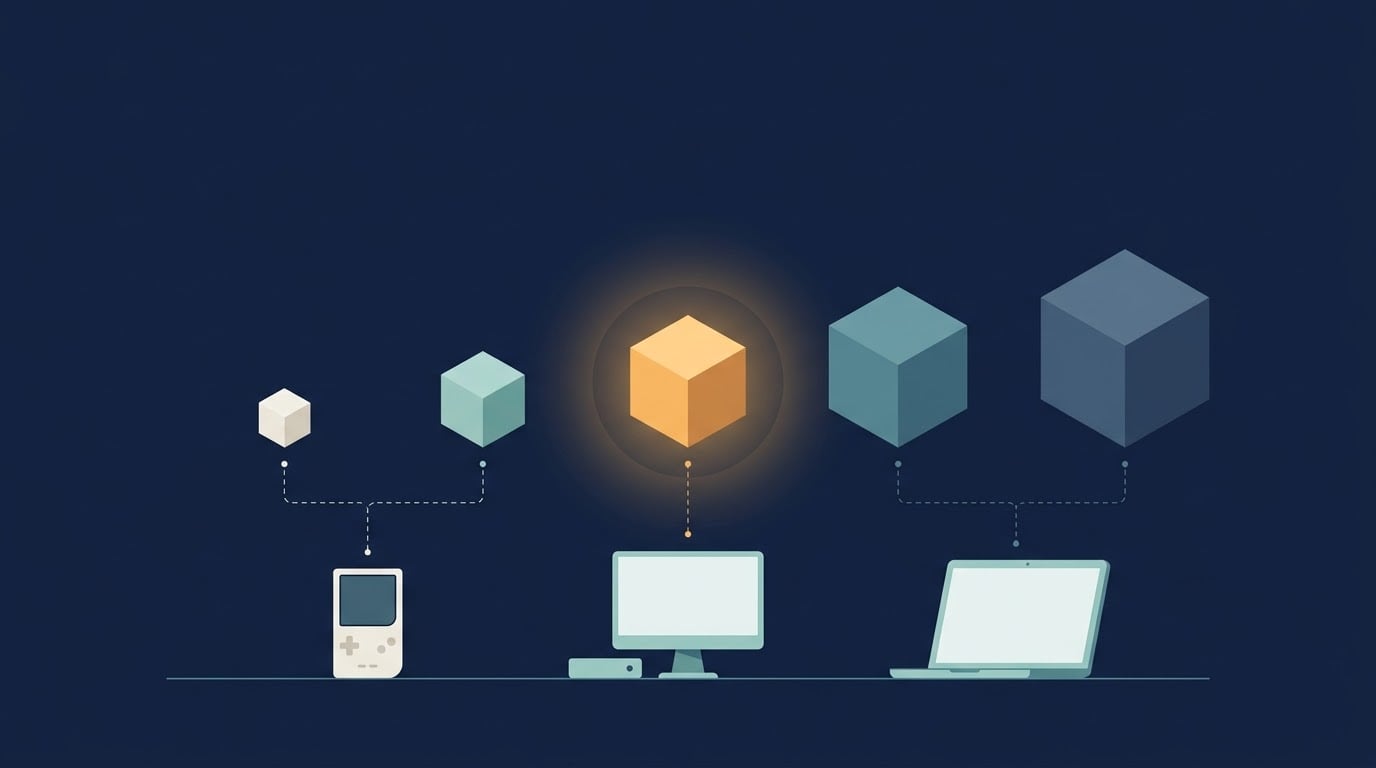
Your GPU performs trillions of calculations per second — yet when you run an AI model at home, it writes... one... word... at... a... time. That gap between raw power and felt speed is the whole story

Introduction When people talk about AI hardware, the conversation usually centers on compute. How many teraflops can a chip push? How many operations per second? Faster chips sound like faster AI. But