

OpenAI DevDay 2026: When the Tool Becomes the Worker
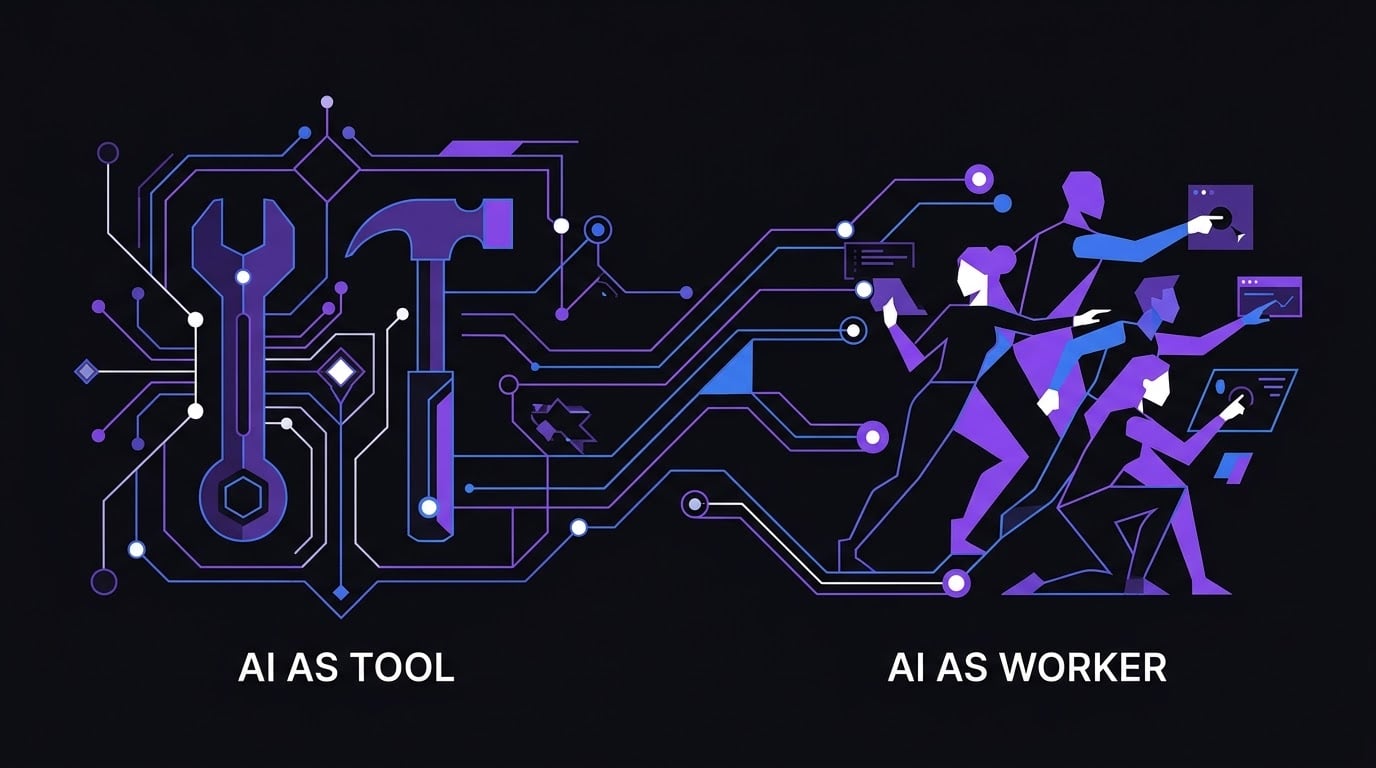
OpenAI's biggest DevDay yet signals a fundamental shift: we're no longer prompting AI—we're managing it.
TL;DR
GPT-6.1 Sol: Near-flagship performance at ~1/5 the cost of Astra
Ultrafast tier: Up to 8x faster token generation for latency-critical workflows
Dots: A managed platform for orchestrating multi-agent teams ($100/month floor)
Agents API: Public beta with hosted execution, memory, and tools baked in
The takeaway: Start architecting for agent workflows now. The infrastructure is ready.
The September 29th edition of OpenAI's DevDay was, by their own measure, their biggest yet. Over twenty announcements rolled out in rapid succession, but two stories dominated the landscape: the release of GPT-6.1 Sol and the debut of Dots, a new platform for multi-agent teams.
Between them, they mark a subtle but significant pivot in how we think about AI—not just as a tool you command, but as an agent you manage.
GPT-6.1 Sol: Performance Without the Premium
OpenAI has been riding high on the momentum of GPT-6 Astra, their premium model that set a new benchmark for reasoning and coding. But premium pricing—often cited at roughly five times the cost of standard tiers—is a hard ceiling for daily engineering workflows.
Enter GPT-6.1 Sol.
OpenAI describes Sol as offering "near-Astra performance" at a fraction of the cost: standard token pricing sits at roughly one-fifth of Astra's rate. For complex coding tasks, professional document work, and general reasoning, the gap is narrowing to the point where the only remaining question is whether you need the absolute peak for that specific task.
Alongside Sol, OpenAI introduced Ultrafast, a paid speed tier boosting token generation up to 8x faster in Codex and 6x via the API. It's a familiar play—charge more for latency—but for CI/CD pipelines and real-time agent loops, milliseconds still matter.
Developer takeaway: Sol makes prototyping economically viable at scale. Reserve Astra for tasks where marginal reasoning gains justify 5x cost.
Dots: Managing AI, Not Writing Prompts
The more philosophically interesting announcement was Dots. Unveiled by Sam Altman in his keynote, Dots is OpenAI's answer to the growing complexity of deploying multiple AI agents simultaneously.
At its core, Dots is a managed environment where you can define roles for different agents—a researcher, a coder, a reviewer—and let them collaborate. It's the platformization of the "prompt chaining" patterns that senior engineers have been hacking together with custom scripts for years.
The pricing floor is reportedly $100/month, positioning it squarely against enterprise workflows rather than hobbyist projects. Whether this succeeds depends on whether the abstraction holds up under real-world friction—multi-agent systems are notoriously difficult to debug when agents start hallucinating each other's outputs.
The open question: Does managed orchestration solve the debugging nightmare, or just hide it behind a billing layer?
The Agents API Goes General
Tying it all together, OpenAI's Agents API has moved into public beta. With hosted execution, memory, and tool integration baked in, the barrier to building persistent AI assistants just dropped significantly. You no longer need to bolt on vector databases and state management; OpenAI is offering that as infrastructure.
What It Means for Developers
We are moving past the era of "chat with an LLM" into the era of "deploy AI workers."
GPT-6.1 Sol makes the individual worker cheaper and more competent
Dots provides the middle-management layer to coordinate them
The Agents API gives you the factory floor
For developers, the immediate implication is clear: start designing your systems around agent workflows now. The APIs are ready, the models are cheap enough to prototype with, and the question is no longer can you build an AI-driven system—it's whether your architecture can handle autonomous agents making decisions in real-time.
Where to Start
Prototype with Sol on your existing prompts—benchmark against your current model
Map your workflow into distinct roles (research → generate → review)
Experiment with the Agents API for stateful, multi-step tasks
Evaluate Dots if you're coordinating 3+ agents in production
The tools are here. The next step is figuring out what we actually want them to do.
Sources: OpenAI DevDay Recap, The Verge, Techloy, OpenAI Community